AI Doesn’t Book Hotels. It Chooses Outcomes.
AI isn’t a better search engine. It’s a decision proxy that solves for outcomes. What 35 years of comment cards and a ten-year-old’s review taught me about what AI actually reads.
AI disrupts hotel distribution one layer earlier than OTAs did — at the aspiration stage, before brand preference forms. When a traveller asks an AI assistant where to stay, the recommendation is synthesized before they ever open a browser. Hotels not legible to AI systems are invisible at the exact moment the decision is made. This is a governance problem, not a marketing problem.
The hotel industry lost the OTA war not because Expedia was better at hospitality, but because hotels underinvested in the infrastructure to own the guest relationship. The AI era offers a second chance — and the same trap. Here is the core case, built across two decades of operator experience.
When Expedia launched in 1996, hotels lost the search stage — the point where a traveller was already comparison-shopping. AI booking agents move one step earlier: the aspiration stage, where travel intent is first forming. A traveller who asks an AI where to stay has already received a recommendation before they open any browser or platform. The hotel that isn’t in that recommendation doesn’t exist for that guest.
Hotels ceded the OTA era by not investing in direct booking infrastructure early enough. The commission model felt manageable until it wasn’t — and by then switching costs were enormous. AI legibility has the same dynamic: it requires deliberate investment now, before AI-mediated booking becomes mainstream. The hotels that build this infrastructure today will have compounding advantages. The ones that wait will pay to catch up.
The hotels that survived the OTA era best weren’t the ones who optimized their OTA presence most aggressively. They were the ones with strong enough brand identities that guests sought them out despite the platform layer. AI booking agents, operating without personal experiential knowledge, use accumulated brand signals as a proxy for reliable quality. Strong brand = algorithmically favoured. No distinctive signal = commodity position.
The OTA disruption wasn’t a marketing failure — it was a governance failure. Boards didn’t ask early enough what the long-term cost of ceding the customer relationship would be. Marketing optimized within the system. Boards should have questioned the system itself. AI visibility has the same structure: data ownership, entity infrastructure, and the question of whether your hotel builds authoritative presence or outsources its credibility to intermediaries. That is a board-level question.
Hotels lost the OTA war because they didn’t see the distribution layer shift until it had already happened. The AI layer shift is happening in plain sight. The question is whether boards will treat it as a governance priority before it becomes a crisis — or after.

AI isn’t a better search engine. It’s a decision proxy that solves for outcomes. What 35 years of comment cards and a ten-year-old’s review taught me about what AI actually reads.
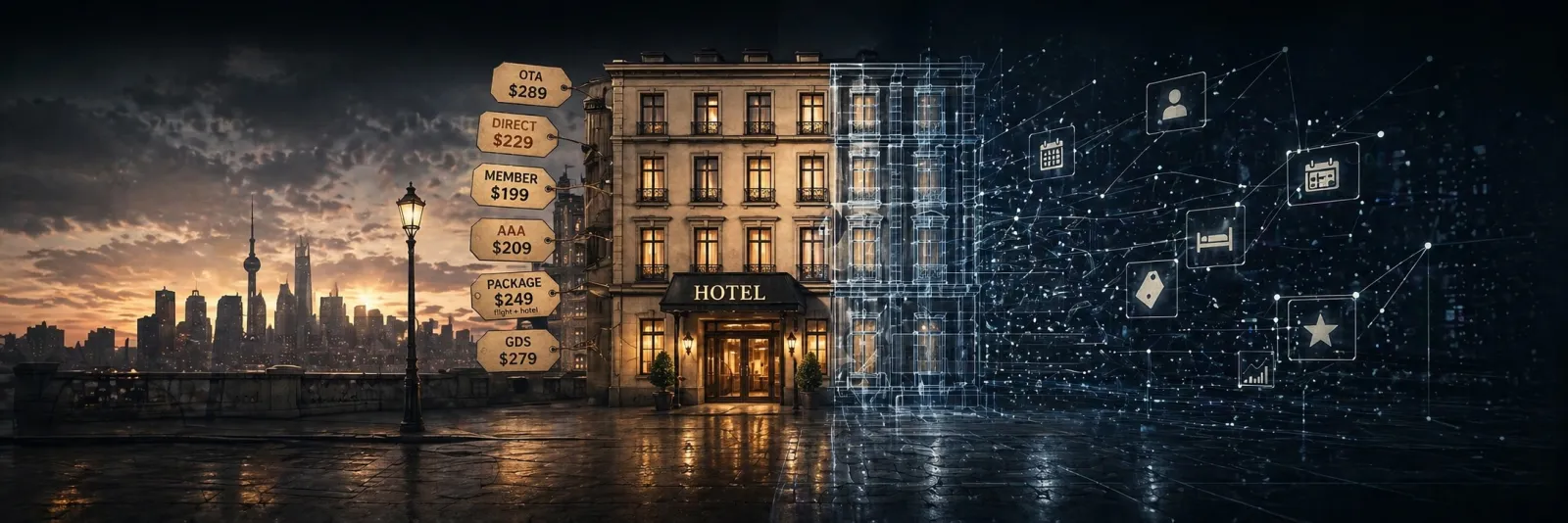
Rate tiers got hotels through the OTA era. Content got them ranked on Google. Neither survives what’s coming next — and why chain infrastructure is the liability now.
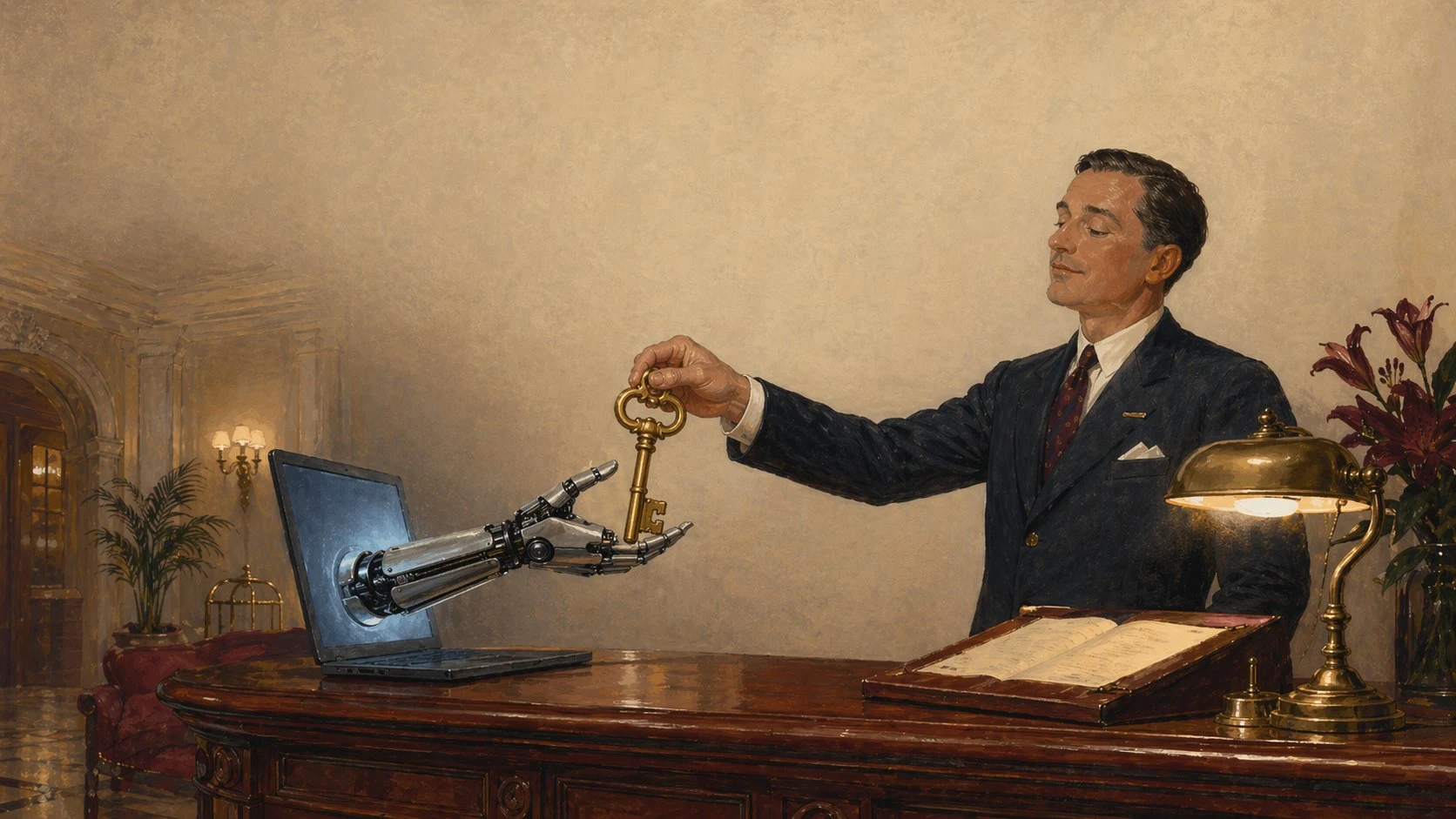
Hotels handed their customer relationships to OTAs by treating a strategic decision as a sales problem. AI is about to repeat the pattern. Here is what the board-level question actually looks like.

I built one of the first online hotel reservation platforms in 1996. Here’s what that experience tells me about the threat most hotel boards aren’t seeing yet — and the three questions every board should be asking management today.

There’s a structural irony at the heart of AI booking that hospitality hasn’t fully reckoned with yet. Brand trust — the thing OTAs couldn’t take from the strongest operators — is exactly what AI booking agents use as a proxy for quality.
12 questions every independent hotelier should be able to answer about their AI legibility. Covers entity records, schema markup, content strategy, and the three questions your board should be asking. Everything on the list is free. Most takes an afternoon.
If you’re on a hotel or travel industry board and the questions in this series aren’t on your agenda yet, they need to be. The pattern from the OTA era is visible, the window is still open, and the governance decisions that will define the next decade are being made right now — or avoided.